The world’s most talked-about restaurants often arrive with architectural drama. Sushi Saito takes the opposite approach: a quiet counter, a limited number of seats and a chef whose craft is measured in the warmth of rice, the cut of fish and the fraction of a second before a piece of sushi reaches a guest.
At a glance: A Tokyo sushi counter built around Takashi Saito’s attention to rice temperature and timing. Check the restaurant listing before planning a visit.
In this guide
- A revelation about rice
- Building a restaurant around the guest
- Why a small counter became a worldwide name
Takashi Saito did not build his reputation by trying to reinvent the appearance of sushi. He worked within the demanding grammar of Edomae sushi, refining familiar elements until the simplest gestures became unusually expressive.
A revelation about rice
Saito’s interest in sushi developed after he worked at a fishmonger and was introduced to a proper counter-service sushi meal. He later described discovering that sushi rice could be warm and seasoned in a way he had not experienced growing up. That contrast became formative.
The fish is only part of the construction. The rice must have the right temperature, seasoning and texture. Saito favours a touch that holds the piece together in the hand or with chopsticks, but allows it to loosen naturally in the mouth.
Building a restaurant around the guest
The chef trained in established Tokyo sushi kitchens and later worked with Sushi Kanesaka before opening Sushi Saito under his own name in 2007. The restaurant built its reputation through an intensely personal counter experience and the Japanese ethic of omotenashi — hospitality founded on preparation and attentiveness rather than ceremony for its own sake.
In a Michelin interview, he emphasised that technical excellence is not enough if a chef loses sight of the person being served. The aim is not merely to demonstrate skill; it is to create the moment when a guest recognises something delicious.
That philosophy creates a particular atmosphere. The room is small. The interaction between chef and guest is immediate. There is nowhere for the work to hide behind effects or theatrical lighting. The performance, if that word applies at all, is the work itself.
Why a small counter became a worldwide name
Sushi Saito’s reputation has travelled far beyond Tokyo, and the chef’s approach has influenced a new generation of sushi specialists. The original restaurant remains famously difficult to access; its scarcity is tied not simply to demand but to the limited scale of the experience.
The restaurant appeared at No. 33 on Asia’s 50 Best Restaurants 2025 list. But ranking a sushi counter can only reveal so much. The more interesting achievement is that Saito has made precision, restraint and generosity feel like a complete restaurant concept.
In a dining era preoccupied with surprise, Sushi Saito suggests that the greatest luxury might be a perfectly judged gesture repeated, patiently, every day.
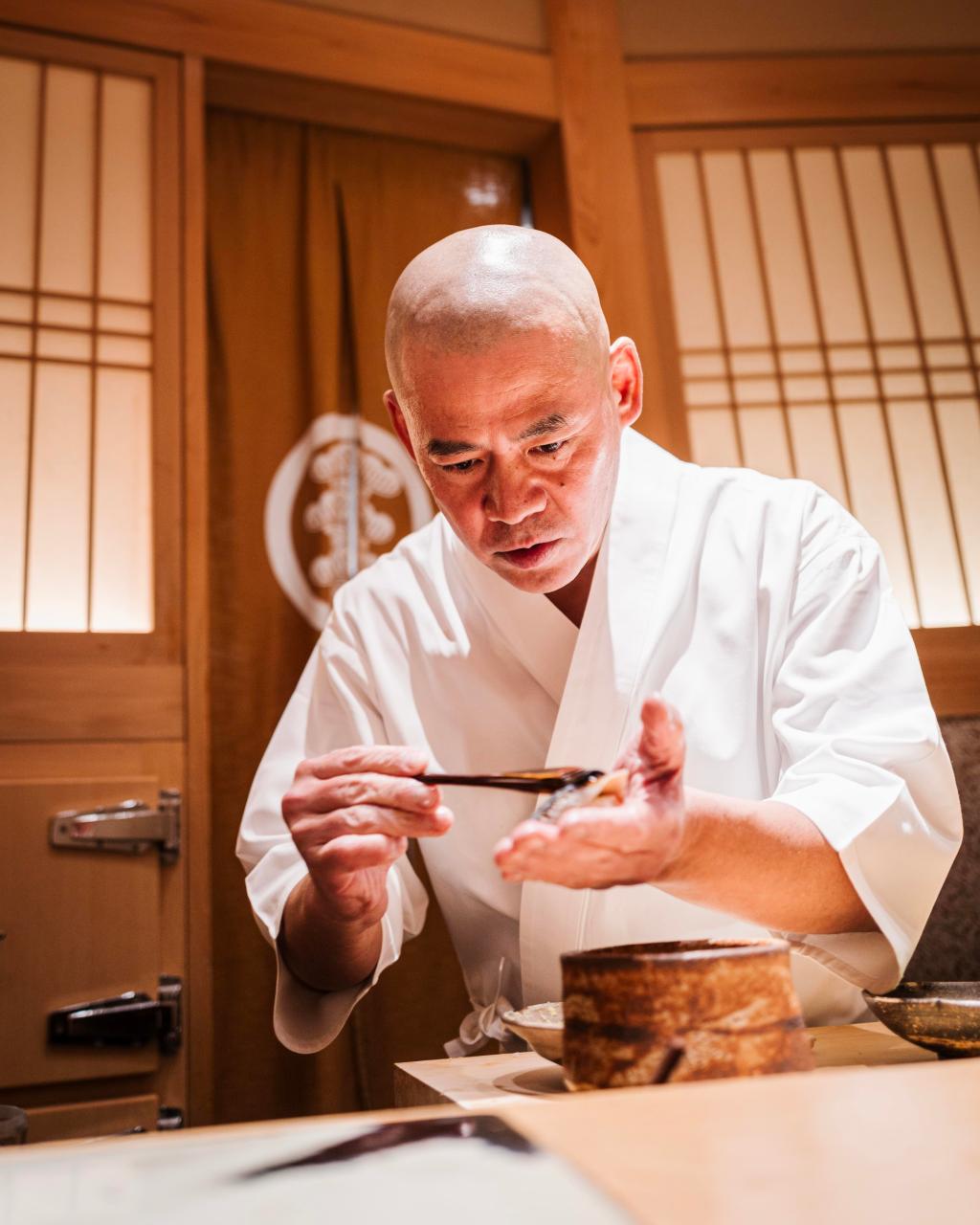
Archive photograph: chef Takashi Saito preparing sushi at Sushi Saito in October 2023. JuanitoFatas / Wikimedia Commons, CC BY-SA 4.0.
More in Tokyo: Read about Narisawa’s satoyama cooking or explore the city in our Tokyo story.
Sources: Michelin Guide — The Warmth of Sushi; The 50 Discovery — Sushi Saito; Asia’s 50 Best Restaurants — 2025 list.