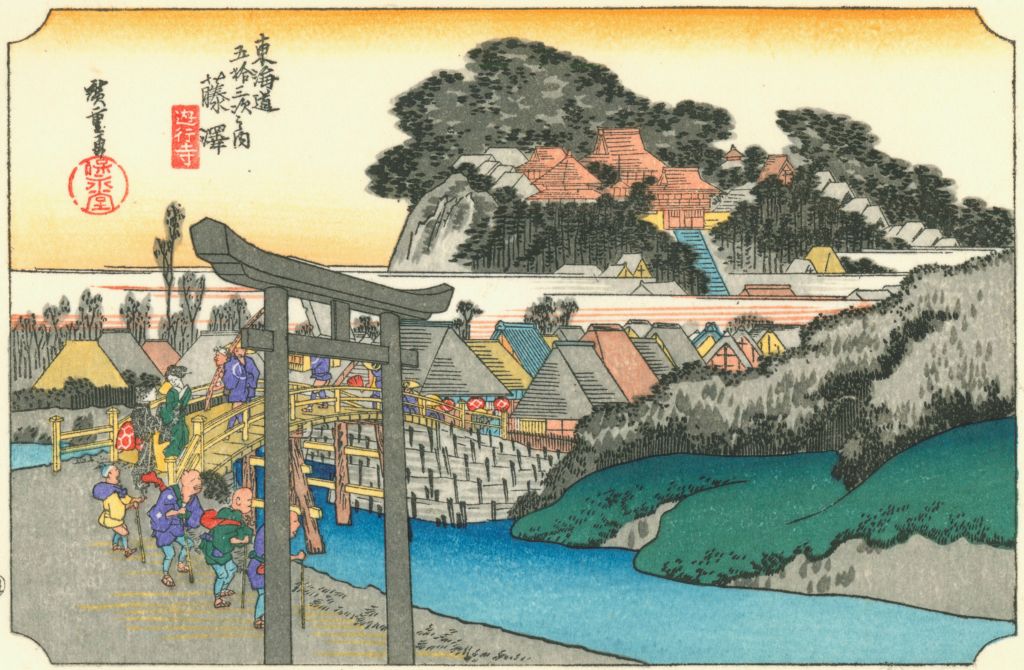
A single Japanese woodblock print can look almost weightless: a passing cloud, a distant hill, a precise line marking the edge of water. But the apparent ease is deceptive. Every colour has to be planned, carved, inked and transferred by hand. Every registration of paper against block matters.
The Japanese technique known as mokuhanga — water-based woodblock printing — became famous through ukiyo-e artists such as Hokusai and Hiroshige. Today, its survival depends on people willing to learn a demanding sequence of physical actions in an era when an image can be generated almost immediately.
A workshop keeping the process visible
In Tokyo, the Mokuhankan workshop founded by printmaker Dave Bull offers one of the clearest examples of that commitment. Bull came to Japan in the 1980s and taught himself through close study of surviving prints, working towards mastery of cutting and printing methods that usually required years of apprenticeship.
His workshop has produced reproductions of historical prints and contemporary projects that bring traditional technique into contact with modern imagery. Rather than treat ukiyo-e as something locked behind museum glass, the practice makes it an active process again: blocks are carved, colours are prepared and new sheets of paper emerge one by one.
Why the paper matters
Woodblock printing is as much about touch as design. The carver feels the resistance of the wood beneath a knife. The printer works with dampened washi, pigments, brushes and a hand-held baren. Too much pressure changes a surface; too little leaves the impression weak. Slight variations can give each impression its own character.
The process offers something that digital reproduction cannot quite simulate: a visible relationship between decisions and matter. The print may be editioned, but its making is not frictionless. It carries evidence of the bodies and materials involved.
Old methods, contemporary eyes
The best case for the revival is not that everything old should be preserved unchanged. It is that an old method can still produce images a new audience wants to live with. Contemporary printmakers can reinterpret familiar subjects, collaborate with illustrators and experiment with new designs without abandoning the technical foundations.
That is why a workshop like Mokuhankan is interesting well beyond Japan. It reminds us that tradition only remains alive when somebody is still doing the work. The beauty of the finished print is only half the story.
Image: Utagawa Hiroshige, Fujisawa, from the Fifty-three Stations of the Tōkaidō, c. 1833–34. Historical public-domain woodblock print; not a work from the modern Mokuhankan workshop.
Sources: Mokuhankan — About the Collection; Mokuhankan — Workshop and printmaking.