A machine can generate a thousand images in the time it takes an artisan to shape a single vessel. That speed is extraordinary. It is also one reason a physical object can feel newly significant. When almost anything can be pictured, the evidence of a real hand — the irregularity of a glaze, the tension of a thread, the weight of polished metal — becomes its own form of fascination.
This September, Venice offered a spectacular argument for that idea. Homo Faber 2026: An Island of Light, presented from 1 to 30 September at the Fondazione Giorgio Cini on San Giorgio Maggiore, brought together more than 500 artisans from over 70 countries and around 700 objects. Curated by the Michelangelo Foundation and staged under the artistic direction of Es Devlin, it put materials and their makers at the centre of the story.
A different kind of spectacle
Devlin is known for ambitious visual environments, but here the extraordinary stagecraft did not replace the objects. It framed them. Light, reflection, movement and historic architecture helped reveal the surfaces that digital images can flatten: translucent glass, carved texture, woven fibres, handmade ceramics and the minute decisions that distinguish one object from another.
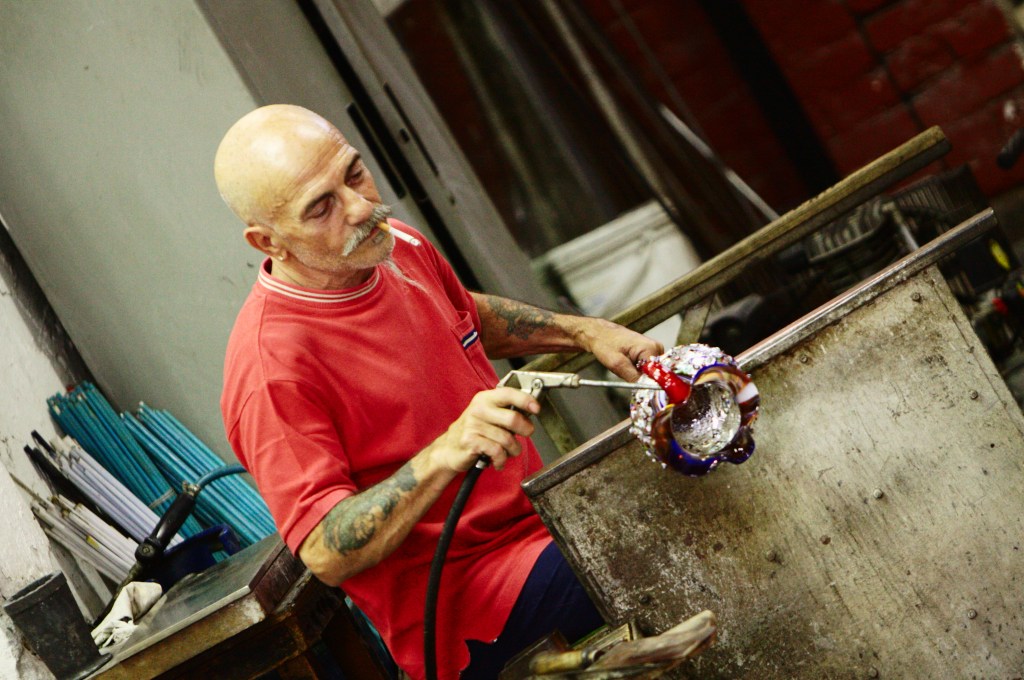
Live demonstrations gave the exhibition another dimension. Watching somebody work is different from reading the word handcrafted on a label. It reveals timing, concentration, pressure, risk and the accumulation of knowledge in the body. A craftsperson’s expertise is not merely a final design; it is also the ability to respond to a material while the work is happening.
What the algorithm cannot hold
None of this means contemporary craft must reject technology. Many makers move comfortably between traditional methods and new tools. What matters is the distinction between imagining an object and bringing one into the physical world. The latter requires materials, time, physical limits and choices that cannot be undone with a click.
Venice is a fitting setting for the conversation. Its history is inseparable from skilled hands: glass on Murano, textiles, metalwork, restoration and the everyday practices that keep a city’s cultural identity alive. Homo Faber suggested that craft is not a sentimental retreat into the past. It is a living form of intelligence.
The 2026 edition has now closed, but its central question remains urgent: when perfect-looking images are easy to produce, what makes an object worth keeping? One answer is that it carries more than an appearance. It carries the trace of somebody having made it.
Exhibition: Homo Faber 2026: An Island of Light · Fondazione Giorgio Cini, Venice · 1–30 September 2026.
Sources: Homo Faber 2026 — official overview; Fondazione Giorgio Cini — exhibition programme.
Image: a master glassmaker at work in Murano. A contextual photograph of Venetian craftsmanship, not the 2026 exhibition. Mex3 / Wikimedia Commons, CC BY-SA 3.0.