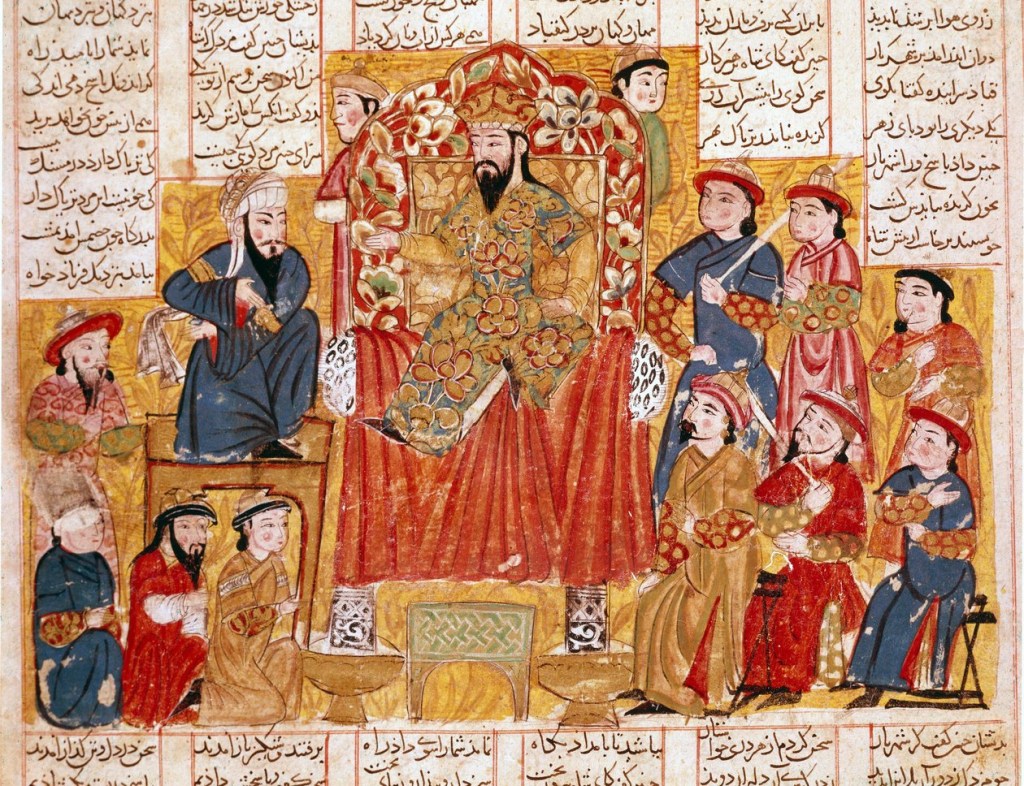
A Persian miniature was never simply a small painting. It was a universe built from pigment, poetry and extraordinary concentration: palace courtyards, impossible gardens, battles, myths and human figures composed with a precision that demanded attention. Centuries later, a new generation of Iranian artists is asking what that visual language can still say.
The answer is not a nostalgic copy. It is something stranger and more ambitious. In 2025, the Middle East Institute’s Maximal Miniatures: Contemporary Art from Iran brought together thirteen artists who used the traditions of Persian manuscript painting as a starting point for contemporary questions. The exhibition included work by Farah Ossouli, Arghavan Khosravi and others, showing how an established art form can change its meaning without losing its memory.
The past, taken apart
In classical miniature painting, literature and image often belonged together. Stories from the Shahnameh, the Persian Book of Kings, became elaborate visual worlds of line, ornament and layered space. Contemporary artists have inherited those devices, but not necessarily the stories their predecessors told.
Arghavan Khosravi, for example, combines miniature-inspired compositions with surreal spaces and sculptural elements. Her imagery can suggest doors, walls, enclosed rooms and figures negotiating their surroundings. The architectural language of the miniature becomes a way of thinking about memory, belonging and personal freedom.
Farah Ossouli has also drawn on Persian miniature aesthetics while placing women and contemporary life at the centre of her work. What looks delicate at first glance can carry deeply charged questions about who is visible, whose story is told and what the past has left unresolved.
A living language, not a museum label
In October 2026, Dastan Gallery’s Letters from Iran presentation at Frieze London brought Iranian artists, including the collaborative duo Maryam Ayeen and Abbas Shahsavar, into an international art-fair setting. Their work shows another route forward: traditional brushwork and complex composition applied to domestic interiors and contemporary tensions.
This matters in an age obsessed with the instant image. Miniature painting demands decisions about detail, scale and symbolism that reward slow looking. AI can imitate the appearance of decorative intricacy; it cannot replace the particular histories and lived experiences these artists are choosing to express.
Iranian artists are not rescuing a dead form. They are demonstrating that a visual tradition can be restless, contemporary and even confrontational. The miniature survives because artists keep finding reasons to change it.
Image: historic Shahnameh miniature, c. 1330, public domain. Used as a reference to the tradition; this is not an artwork by a contemporary artist.
Sources: Middle East Institute — Maximal Miniatures; Dastan Gallery — Frieze London 2026; Dastan Gallery — Maryam Ayeen & Abbas Shahsavar.