In Seoul, the future can seem to arrive before the present has caught up. Screens, design trends and new technologies move quickly. Yet one of the city’s most interesting cultural stories this autumn begins with a quieter question: what happens when you take an inherited pattern seriously enough to give it an entirely new life?
At the Seoul Museum of Craft Art, Equinox: Autumnal Equinox_Vernal Equinox explores roughly four decades of work by textile designer Chang Eung-bok, also romanised as Jang Eung-bok. Running from 22 September 2026 to 7 March 2027, the exhibition follows her journey from Korean cultural motifs into textiles, furniture and the spaces people inhabit.
From a piece of cloth to an entire room
Chang’s practice draws on the delicate world of gyubang craft, Korean folk imagery and the aesthetic vocabulary of traditional domestic life. A pattern might begin as something small and personal, then move onto fabric, an object or a room. At each stage it changes its relationship to scale, light and the people who encounter it.
The museum presents a body of work that moves between ornament and architecture. The exhibition’s sections examine patterns, the objects they become and the environments they inhabit. Workshops and educational programmes extend the conversation to practices such as indigo dyeing and pattern-making, reminding visitors that design is as much a process as a result.
Material memory in a digital city
There is a temptation to think of tradition and technology as opposites. In fact, the most compelling makers often work somewhere in between. Chang’s example shows how inherited forms can be studied, reinterpreted and placed into contemporary life without losing their cultural specificity.
That idea has particular resonance during the current enthusiasm for generative AI. A machine can imitate the appearance of patchwork; it cannot by itself tell the whole history of why a material, motif or technique mattered to a community. Physical craft makes the relationships between culture, labour and use harder to overlook.
Why it matters now
Equinox is not a protest against AI. It is an invitation to recognise another form of intelligence: the patience of the maker, the accumulated knowledge of a technique and the judgement required to translate tradition into an object somebody might actually live with.
For travellers interested in a Seoul beyond the familiar shopping streets and neon skyline, this is a rewarding place to start. The museum is near Anguk Station, admission is free and the exhibition continues into March 2027. In a city looking constantly forward, Equinox suggests that progress can also begin with a careful look at what people have already made.
Exhibition: Equinox: Autumnal Equinox_Vernal Equinox · Seoul Museum of Craft Art, Exhibition Building 1, 3F · 22 September 2026 – 7 March 2027 · Free admission.
Sources: Seoul Metropolitan Government — cultural events; Visit Seoul — Equinox exhibition; Seoul Museum of Craft Art.
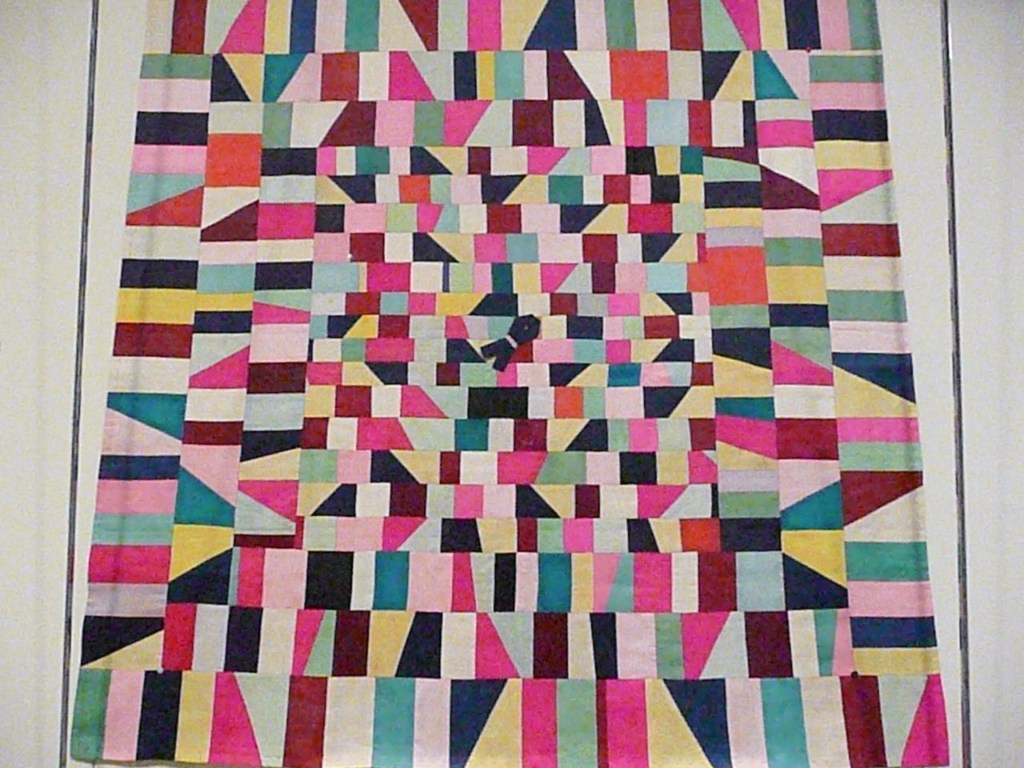
Image: a traditional Korean bojagi wrapping cloth (1950s–1960s), photographed in the Asian Art Museum of San Francisco. Historical reference, not a work in Equinox. angela n. / Wikimedia Commons, CC BY 2.0.