After a major Paris retrospective, a closer look at the velvet scrolls, dark roses and remarkable fabrics of the House of Worth.
In September 2025, a retrospective at the Petit Palais in Paris closed after four months. Presented with the Palais Galliera, Worth: Inventing Haute Couture brought together more than 400 objects to tell the story of the fashion house founded in 1858 at 7 rue de la Paix. The exhibition spanned four generations. To see what made the house so distinctive, start with a single dress.
A Paris balcony in velvet
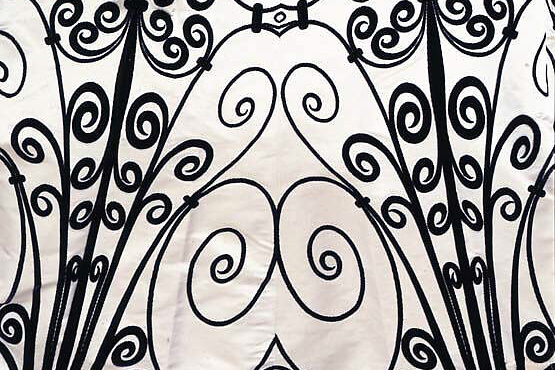
On an evening gown made around 1900, black scrolls curl across ivory satin. They call to mind the ironwork of a Paris balcony, right down to the way the curves open out and turn back on themselves. Look closer and the apparent metal has the soft surface of velvet. As the skirt widens towards the floor, the scrolls have more room to spread. The gown is now in the collection of The Metropolitan Museum of Art in New York.
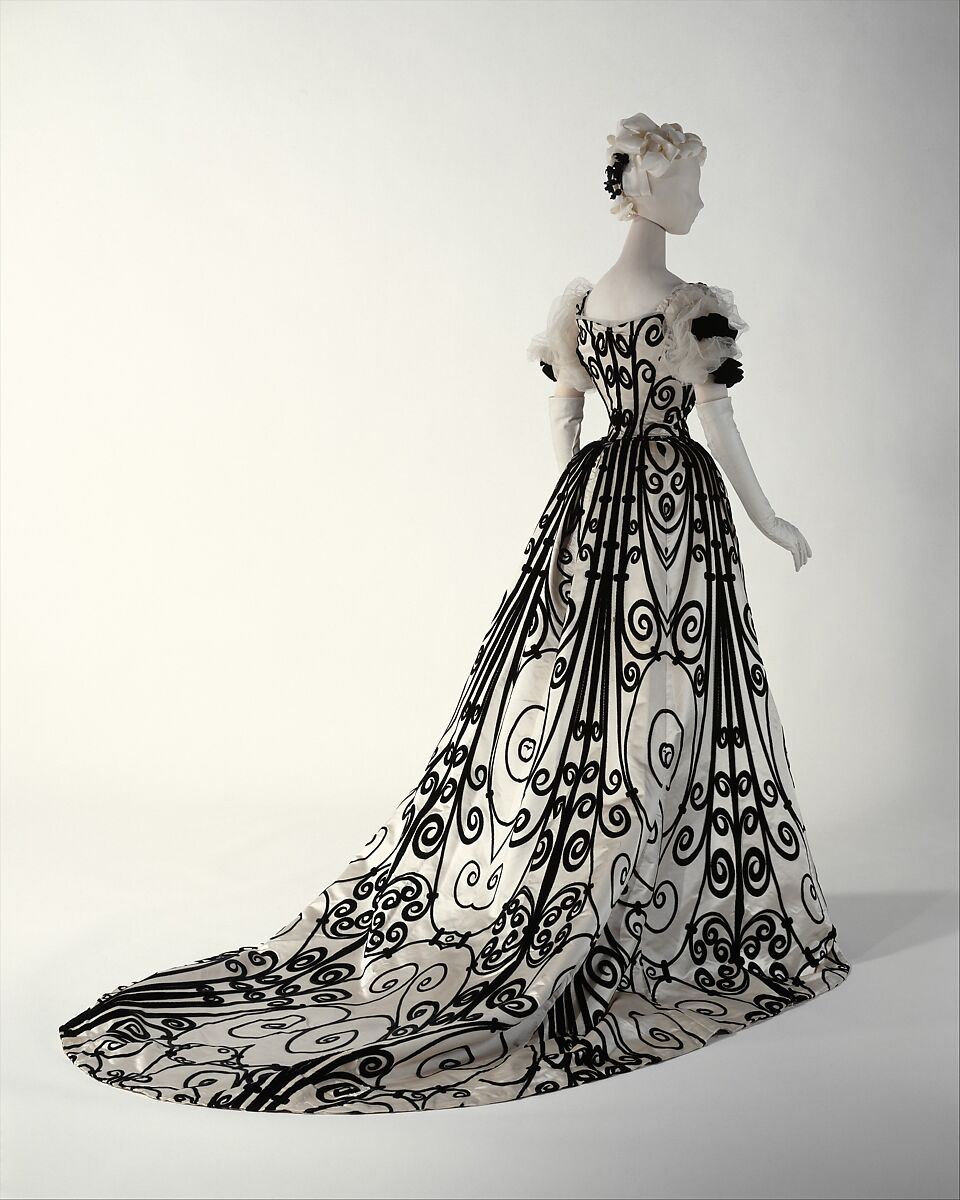
That effect was planned at the loom. The fabric was woven à la disposition, meaning that sections of the textile were designed for specific parts of the dress. The pattern could follow the shape of the bodice and skirt because the weavers already knew where it would sit. A curve that reads as decoration on its own becomes part of the silhouette when you see the whole gown.
Black roses and blue velvet
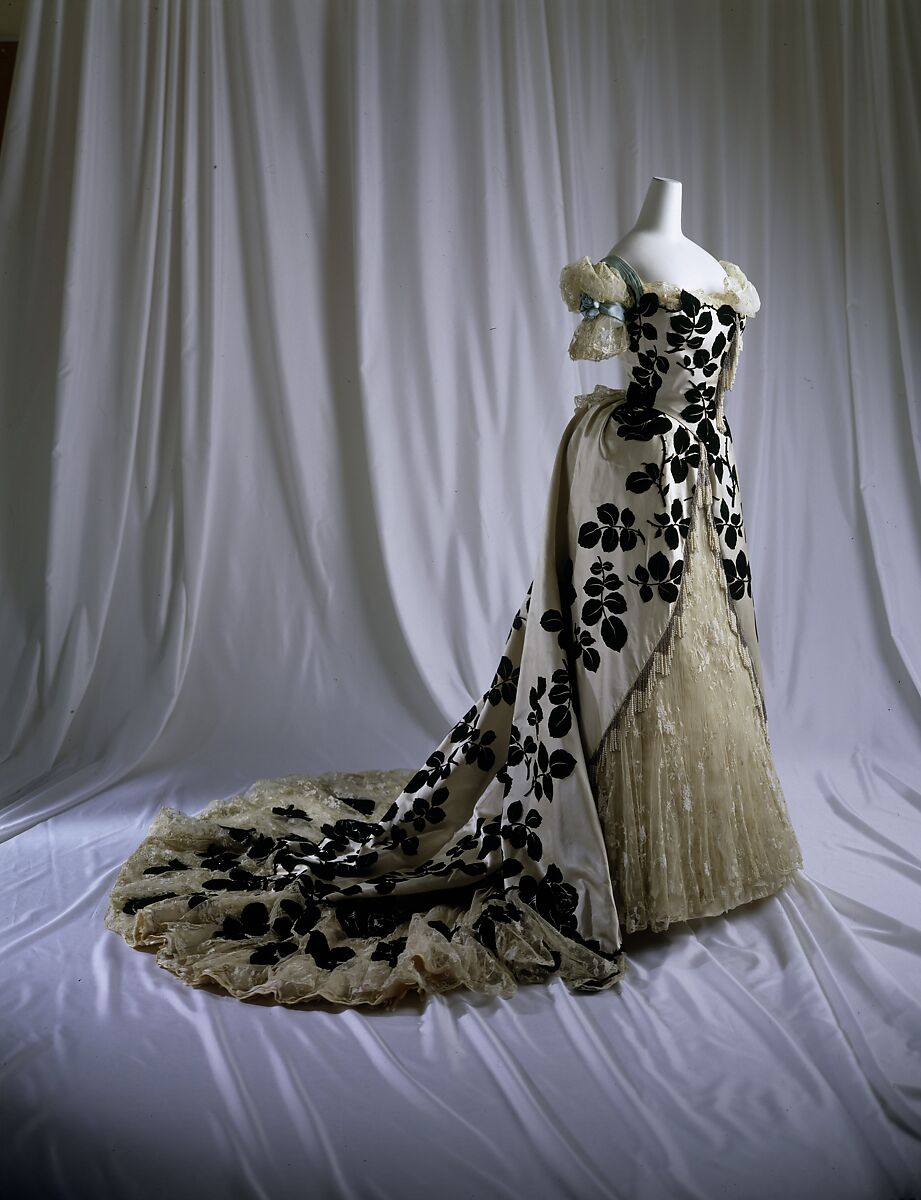
A second Worth evening dress at The Met, from the same period, uses black roses. The dark blooms have a more melancholy effect than the ironwork scrolls. The museum’s curators hear an echo of Baudelaire and Swinburne in them. Seen side by side, the gowns show how differently the house could use the same stark palette. One has the rhythm of a railing. The other has the mood of a late nineteenth-century poem.
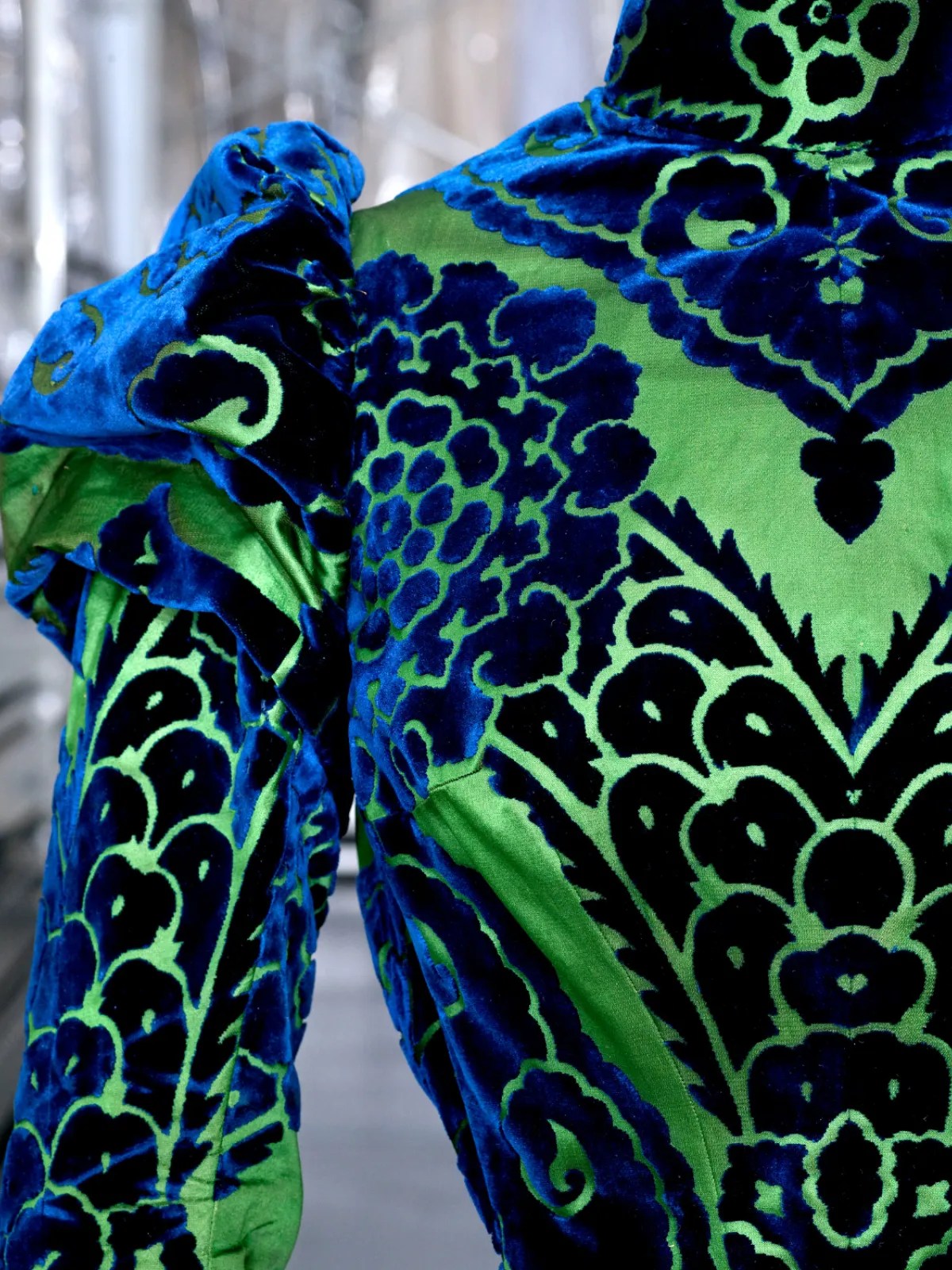
There’s a third Worth garment worth a closer look back in Paris. A tea gown from around 1896–97, photographed by the Palais Galliera, pairs green satin with a pattern in cut blue velvet. The blue and green carry the design even in a still photograph. Look at the texture where the velvet meets the satin, then return to the black-and-ivory gown. A detail that first looked like iron turns out to depend on something as soft as silk.