Some places become famous for one thing. Bali became a world of its own. For a surfer, it is the promise of the next wave. For a traveller, a horizon of limestone cliffs and blue water. For a designer, a place to begin again. For a Balinese family, it is home — grounded in a calendar of ceremonies, ancestors, temples and relationships that long predate any tourism boom.
At a glance: Start with the Bukit Peninsula for cliffs and surf, then head inland to Ubud for rice terraces, temples and waterfalls.
In this guide
- Uluwatu: the other side of paradise
- A coastline, not a single postcard
- The island that lives beyond the lens
- Ubud: green becomes a way of life
- Waterfalls and the wild side
- Why everyone finds a different Bali
The island has turned into a meeting point for people from almost everywhere. Artists, travellers, remote workers and families arrive with different expectations, and often leave with different memories. What unites them is not one single attraction, but the extraordinary range of experiences packed into a relatively small place.
Uluwatu: the other side of paradise
Start in the south, on the Bukit Peninsula, where the shoreline becomes dramatic and the ocean takes centre stage. Uluwatu is a name that has travelled around the world with surfers. Its reef breaks, steep cliffs, narrow access paths and endlessly changing blue make it a destination that feels both raw and immediately recognisable.
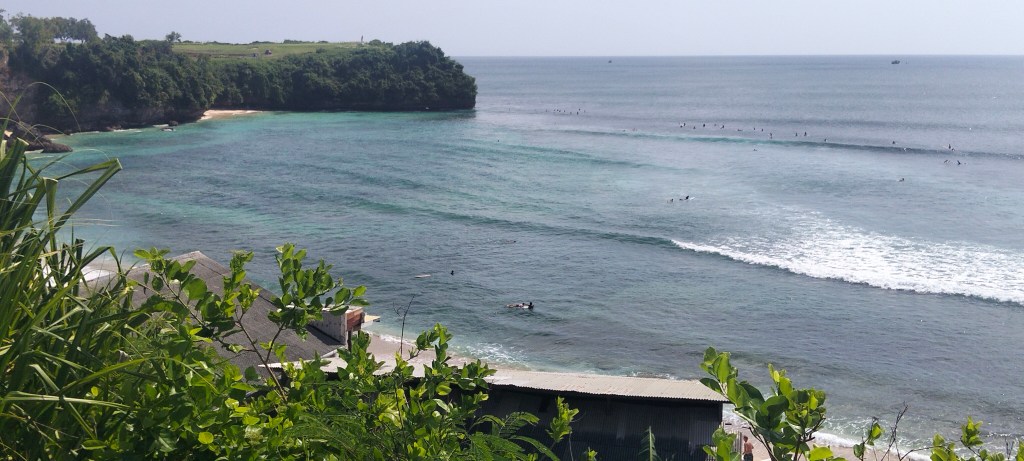
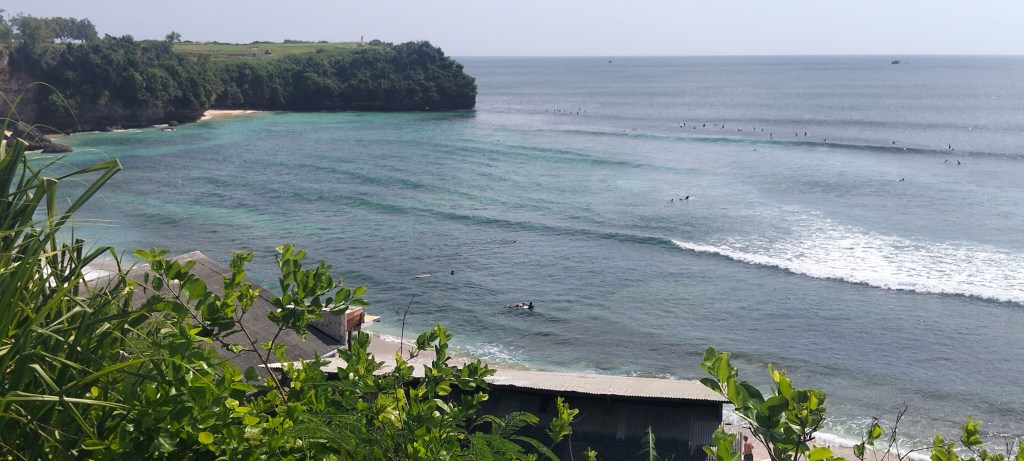
The beauty is not limited to the waves. On the drive along the peninsula, one beach gives way to another, each with its own mood. There is the long, sun-bleached shoreline of Balangan, the cliff-framed sand at Dreamland and the energy of Bingin, where a walk down towards the water is part of the ritual.
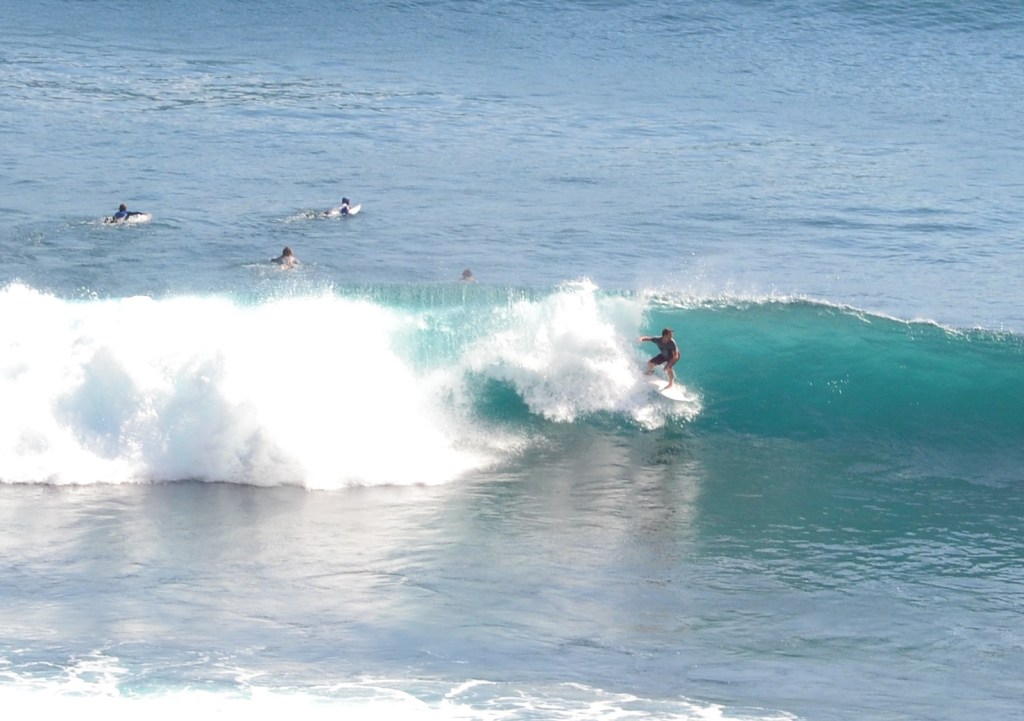
Surfers off Uluwatu. Photo: Simon_sees / Wikimedia Commons, CC BY 2.0.
To someone who does not surf, the day might be built around watching the sets roll in, walking a beach in late afternoon or following the last light across the cliffs. For a surfer, that same view can be a map of changing conditions, tides and possibilities.
A coastline, not a single postcard
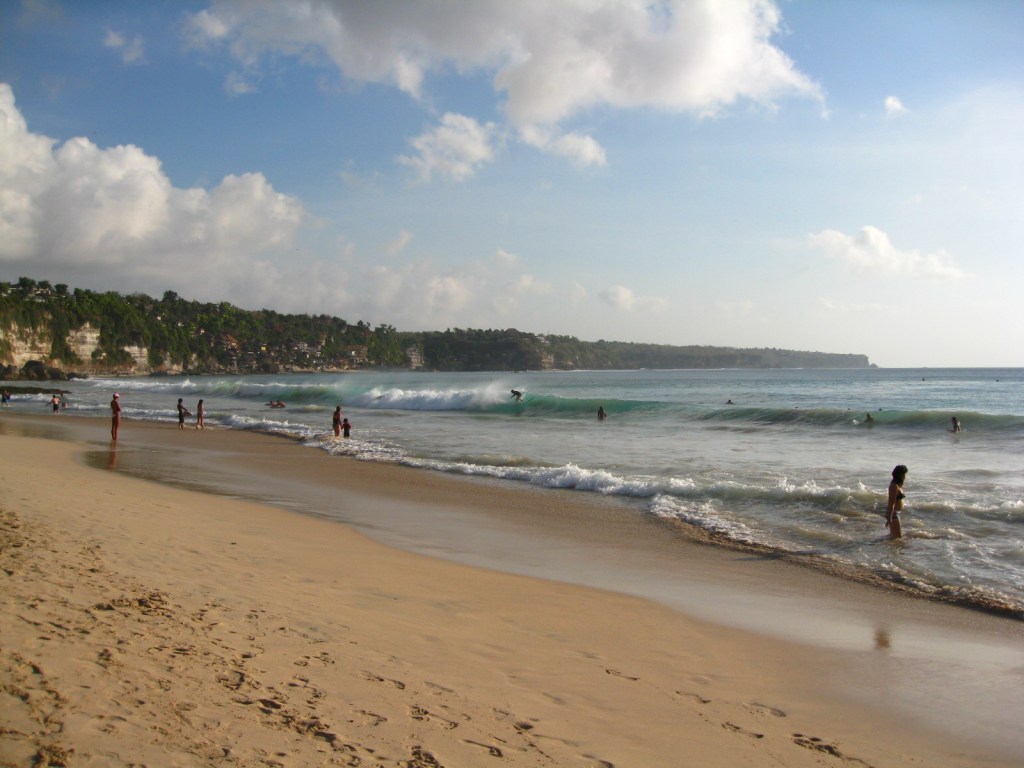
Dreamland Beach, Bukit Peninsula. Photo: Arisdp / Wikimedia Commons, CC BY 3.0.
Melasti is another reminder that the island constantly shifts character. The white limestone road cutting down towards the sea opens onto high cliffs, clear water and a strikingly monumental landscape. Balangan feels quieter from above; Dreamland changes with the swell; Uluwatu’s reef carries its own legendary reputation.
Evenings can move to Jimbaran for the shoreline and seafood, or remain on the Bukit for a slower dinner, a little music and the feeling that the day has not quite ended. These experiences may be familiar to visitors, but they are only one part of Bali.
The island that lives beyond the lens
Go inland and the rhythm changes. There is no understanding Bali without recognising how closely daily life is intertwined with Balinese Hinduism. The small floral offerings outside homes, the scent of incense, ceremonial dress and temple processions are not props for photographs. They are part of a living spiritual culture.
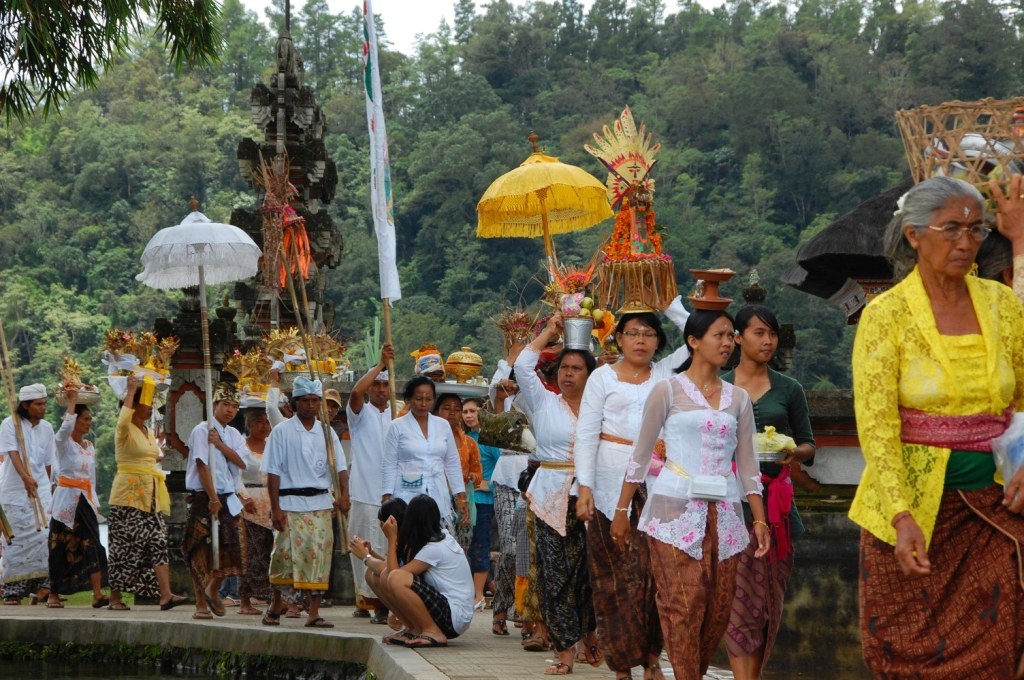
A Balinese Hindu temple procession. Photo: Rollan Budi / Wikimedia Commons, CC BY-SA 2.0.
Village communities gather for ceremonies that help mark time and maintain social bonds. Temples function as places of worship and cultural continuity. A visitor may be lucky enough to pass a procession or hear gamelan coming from a courtyard, but respect matters: dress appropriately, follow local instructions and remember that participation is not simply a tourist experience.
The spiritual life of Bali is also tied to its environment. The UNESCO-listed subak system reflects an older understanding of water, agricultural cooperation and the philosophy of Tri Hita Karana — harmony between the spiritual realm, human relationships and the natural world.
Ubud: green becomes a way of life
Around Ubud, Bali becomes lush and layered. Frangipani trees lean across compound walls; steep valleys drop into jungle; narrow roads pass between rice fields and family temples. Here the appeal is often less about a specific landmark than the atmosphere: early mornings, the sound of insects, wet leaves after rain and a slower pace of looking.
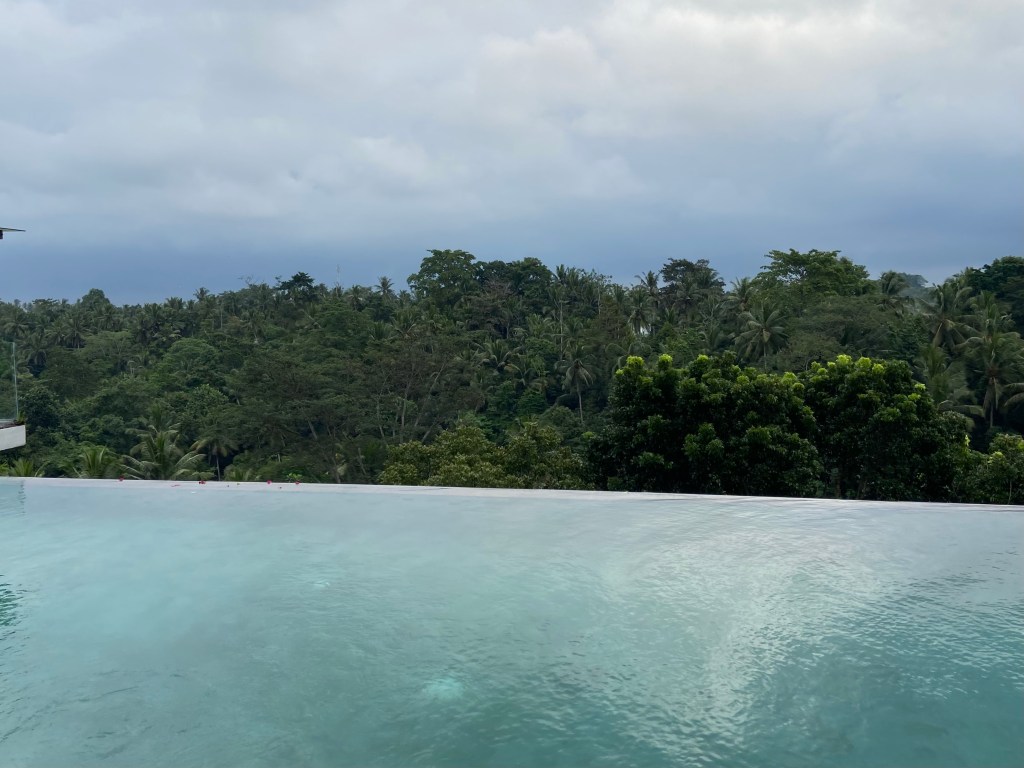
The green landscape of Ubud. Photo: Jeong seolah / Wikimedia Commons, CC0 1.0.
Ubud has long attracted people interested in painting, craft, dance, wellness and design. Today galleries share the neighbourhood with cafés and workshops, and the surrounding villages remain full of makers and everyday rituals. The place is neither untouched nor static, but its creative inheritance is visible in how people work and live.
For many travellers the most memorable moments are small — an unplanned conversation, a carefully woven object, a walk along a green path, or an afternoon spent learning something rather than checking off attractions.
Waterfalls and the wild side
Beyond the cafés and central streets, the landscape opens into river valleys and dense forest. Waterfalls offer a different Bali from the broad beaches of the south: moss-covered rocks, humid air, tall canopies and the sound of water filling a gorge.
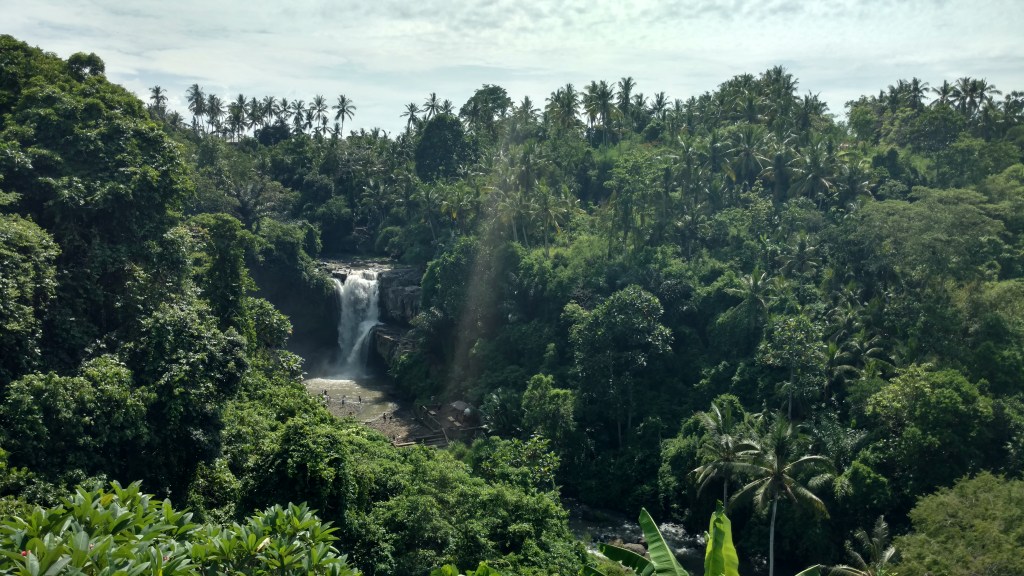
Tegenungan Waterfall near Ubud. Photo: Lasthib / Wikimedia Commons, CC BY-SA 4.0.
Tegenungan, in Gianyar within reach of Ubud, is one of the better-known examples. Elsewhere on the island, routes lead deeper into the hills and towards smaller cascades. None should be treated as a guaranteed swimming pool: conditions can change with rain, and local safety advice deserves attention.
Why everyone finds a different Bali
Some visitors arrive for the surf and barely leave the coast. Others come to study yoga, to photograph architecture, to eat, to create a business or to spend time with a new community. Families find schools and routines; artists find collaborators; curious travellers discover that Bali’s culture is more layered than a holiday brochure could suggest.
The contrast is the point. An afternoon spent watching surfers beneath the cliffs can be followed by a quiet walk among rice fields. A modern restaurant can sit near a family temple. A crowded beach can be less than an hour, or a much longer traffic-filled drive, from an entirely different version of island life.
The visitor economy also brings pressure — on land, water, infrastructure and local communities. To love Bali responsibly means noticing those realities, supporting local businesses and treating the island as a place where people live, not a stage built for outsiders.
Perhaps Bali’s enduring power is that it never asks everyone to want the same thing. The ocean, the ceremony, the jungle, the mountains, the food and the people all tell different stories. Everyone can find something here. The most interesting discovery is what happens when you begin to notice what was already here before you arrived.
Cover photograph: Balangan Beach, Bali, by MickiMouse2 / Wikimedia Commons, CC0 1.0. Other photographs are individually credited alongside each image.
More destinations: Browse our Places section.
Background sources: UNESCO World Heritage Centre: Cultural Landscape of Bali Province; Wonderful Indonesia.